How Did Andy Warhols Art Reflect American Society in the 60s and 70s
Every bit ane of the nearly culturally significant periods of the 20th-century, 1960s art witnessed the rise of the movements which take re-shaped and created new aesthetic linguistic communication and styles. Diverse criticisms expanded challenging the educational systems, the educatee protests and the hippie movement and on a broad calibration tried to revolutionize the world. Pop became the symbol of a new lifestyle struggling against the conservative high civilization. In visual art, movements such equally Pop Fine art, Psychedelic Fine art, Op Fine art, Minimalism, Conceptual Art, and the appeareance of Happenings, became the most significant and shape-shifting concepts of the 1960s art world. Embracing life, the mass produced objects, consumerism, and the growing influence of American popular culture, its rock n' roll music and rising industry, 60s art brought a new kind of popular image and utilize of industrial materials.
Interested in buying and collecting 1960s art? Check out this Andy Warhol print bachelor for auction!
The Rebellion of the 1960s Art
For a number of art historians, the rebellion which occurred during the 1960s art is closely linked to the revolutionary thoughts and deportment of avant-garde movements and their artists at the beginning of the 20th-century. In diverse opinions what the two periods share is their sense of rupture and the creative imagination fueled with technological euphoria. Above anything else, in fact, the visual art of the 1960s and its leading motility Pop Art wished to rebel against the expressive drama and soul of the Abstract Expressionism[1]. Considering the expressive movement to stand for the high art, artists re-enforced the idea of the depression-brow art by using images from the mass culture. As well rebelling confronting Abstract Expressionism paintings, diverse postal service-painterly brainchild artists removed the drama, by erasing any trace of the creative person'southward identity. Taking away the brushstrokes, the painters emphasized the flat surfaces, color, and hard-edge abstraction.
The ascension of the consumeristic society and technology witnessed the growing use of industrial materials within the sphere of art. The Conceptual and Minimalism movements began to use the mass-produced sources, such every bit bricks, physical, steel, and neon, to create sculpture and installation art
which valued the thought and the procedure above the finished object. This farther challenged the systems which existed in the fine art world. Re-defined was the concept of the art object, its existence, and its space.
Major Artists of the 1960s Art
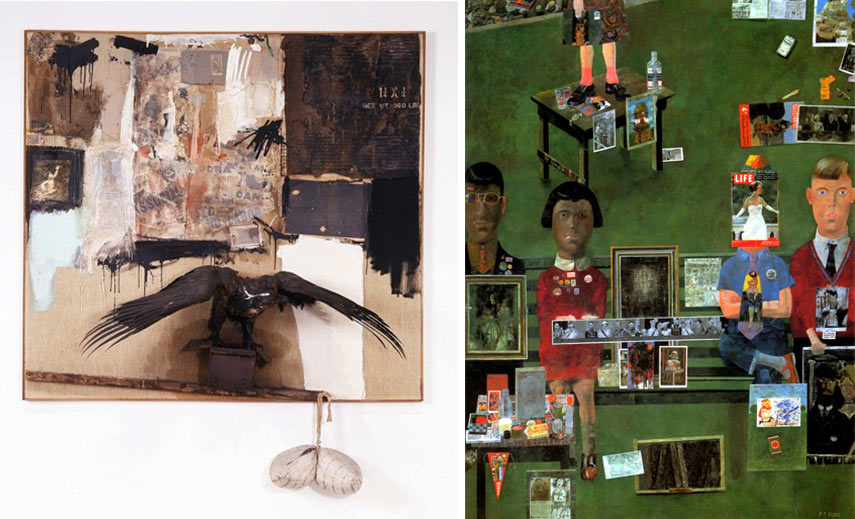
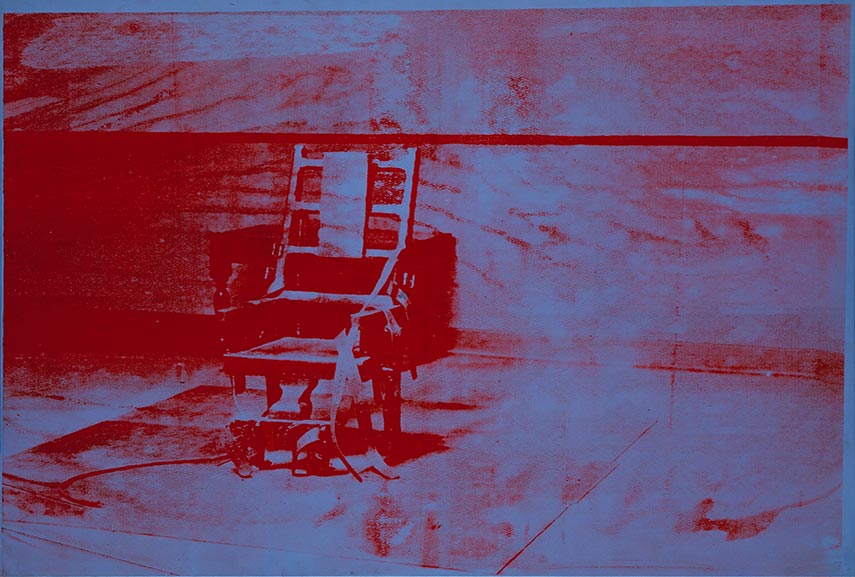
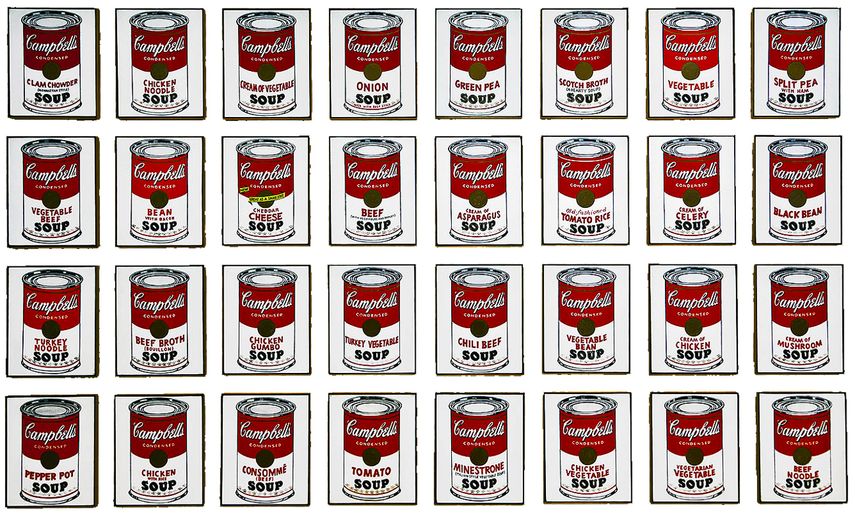
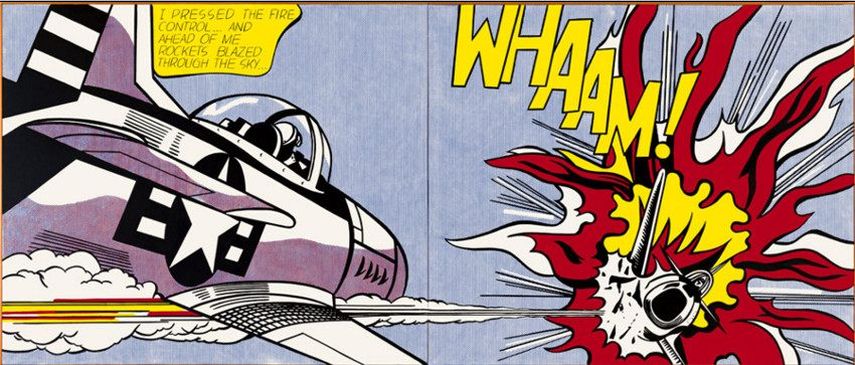
If we define the menstruation as the period of Pop names such as Andy Warhol, Peter Blake, Roy Lichtenstein, Robert Rauschenberg automatically come up to mind. It is to these artists that nosotros owe the idea that life and art fused like never before[2]. Commercial screen printing technique, images from comic books and advertisements, iconic movie and music stars, all were sources of inspiration for the most celebrated pop art artworks. On the other manus, artists such as Joseph Kosuth, Donald Judd, Sol LeWitt, Carl Andre, Yoko Ono reshaped the notion of the object, materials, and introduced the term imperceptible closely linked to the growing scene of Happening and Performance art.
Meet more works by Roy Lichtenstein!
The Most Significant Movements
Leaving nothing sacred and promoting life which rebelled confronting the conservative ideas the following movements are considered equally gems of the 1960s art.
Pop Fine art
The story of the 60s period could not exist without mentioning Popular Art. With its innovations, the movement is considered as the most significant menstruation defining modern fine art. Using the images from mass culture and found objects, popular fine art artists reshaped the face of the painting past introducing a new kind of commercial aesthetics. These ideas helped to influence not simply the visual art but graphic design, fashion and a certain lifestyle. The idea put forward by Andy Warhol that "In the time to come, everyone volition be earth-famous for 15 minutes", influenced the star status of various artists of 1960s art scene and their entourage[3].
Op Art
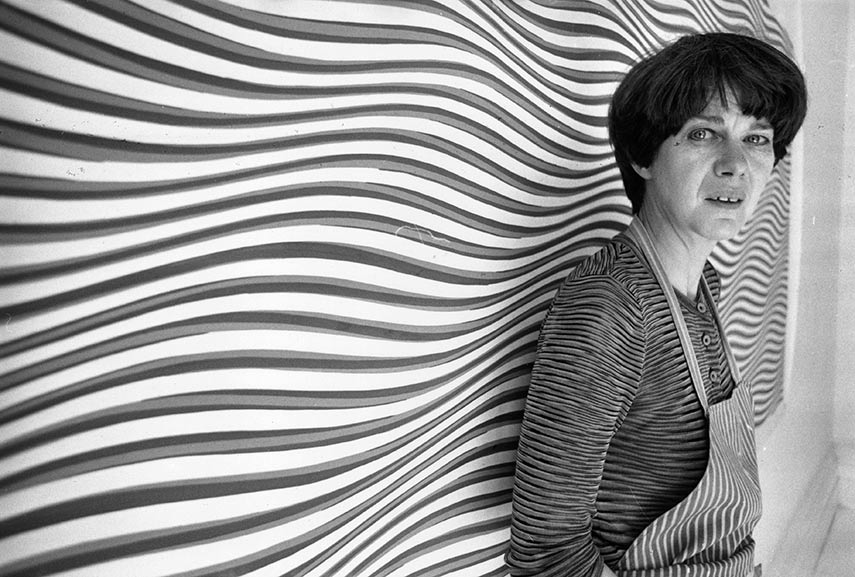
The challenge to the fundamental element of creative production ie. the perception of the visual stands at the root of the Op art move. Embracing abstruse and geometric art, and playing with the almost basic of the art's principles, such as line, color and contrast, Op art artists of the 60s art scene influenced the birth of Kinetic art and the growing scene of Optical Illusion art[4]. Bridget Riley is ane of the near important artists of this motion.
Minimalist Movement
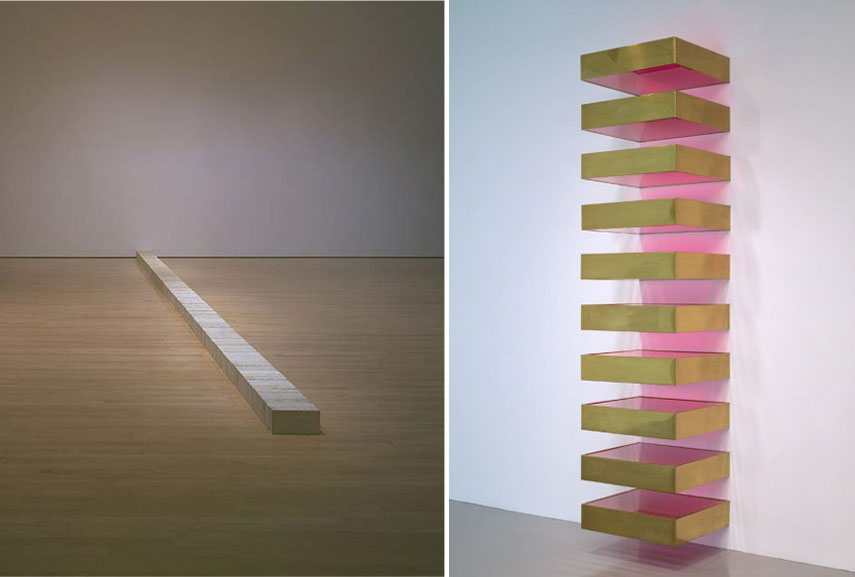
Minimalism was the outset art movement of international significance which originated in America. Celebrating the simplicity and reduction of its paintings it produced a new style of looking at and experiencing the artworks. The denial of the artist's expression joined with the interest in making objects that avoided the appearance of art, gave birth to geometric works. Minimalist artists sought to suspension down the traditional notions of sculpture and painting. The repeated geometric forms, emphasis on the concrete space occupied by the artwork, and the use of prefabricated industrial materials dominated the production of its famous artists, such as Donald Judd, Carl Andre, and Robert Morris.
Conceptual Art
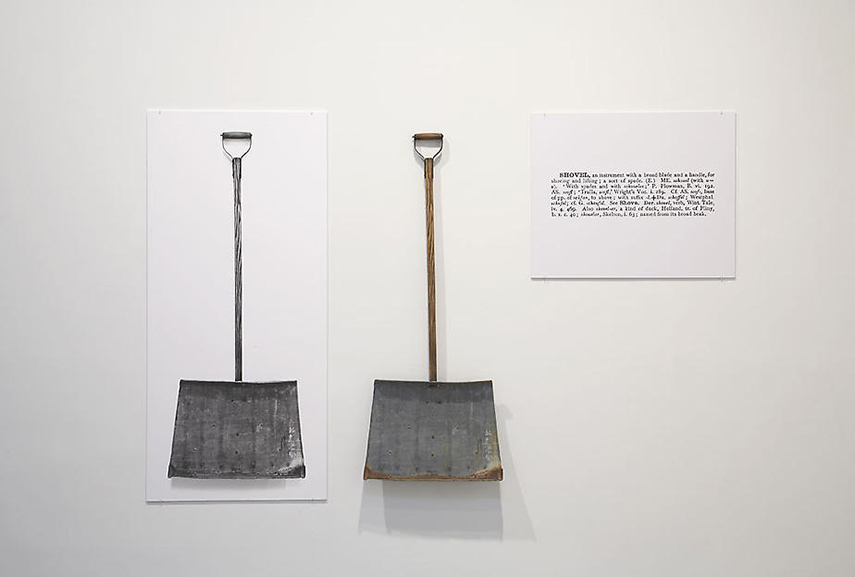
Conceptual art movement emphasized the thought of the artwork higher up anything else. Various forms and tendencies in art, such every bit performance, happening, and the notion of the ephemeral visible in Land art of the 1970s art scene, is said to fit under its definition. Linking the idea of the readymade put forward by the famous Dada creative person Marcel Duchamp, conceptual artists rejected the notion of the cute, rare and proficient as measures of fine art. Reducing the works to an absolute minimum, many referred the movement as the fourth dimension of dematerialization of art.
The significance of the 1960s fine art was further re-enforced during the 70s art and the birth of the important movements such as Feminist art and the Blackness art movement. Due to its turbulent political and social events, 1960s fine art is seen every bit a cut-off catamenia when modernistic art ends and contemporary fine art production begins.


Exploring the second half of the 20th-century volume is a swift-moving account of the visual art in the by. Beginning with the analysis of the style into content, Abstract Expressionism, Pop Art, Minimalism, Conceptual art, various other movements are investigated in the book. Some of the nearly historic and influential artists, such as Joseph Beuys, Andy Warhol, Francis Bacon, along with the works of Feminist and Gay artists are referenced also. Divided into 11 chapters, each section covers a dissimilar movement and trends of its artists. If you lot are interested in this period, or you lot have started a course in Post-Modernism, this volume is an excellent starting bespeak.
References:
- Sandler, I., American art of the 1960s, Paperback, 1989
- Rubin, D., S., Chronophobia: On Time in the Art of the 1960'southward, The MIT Printing, 2004
- Whiting, C., Pop L.A.: Art and the Urban center in the 1960s, University of California Press, 2006
- Due south. Rubin, D., Psychedelic: Optical and Visionary Art Since the 1960s, San Antonio Museum of Fine art, 2010
All images used for illustrative purposes but. Featured epitome in slider: Andy Warhol – Portrait of the artists with the Barilla boxes. Image via widewalls.ch; Instance of Optical Illusion Artwork. Image via widewalls.ch; Carl Andre - Artwork. Image via widewalls.ch
Source: https://www.widewalls.ch/magazine/1960s-art
0 Response to "How Did Andy Warhols Art Reflect American Society in the 60s and 70s"
Post a Comment